千王之王重出江湖
In a Beijing hutong, old roots hold firm amid renewal_我的网站

A | 国庆假期,正是出游赏秋的好时节,想要出去看世界,又不想面对人山人海,那不如看看抚顺这座历史悠久的宝藏城市吧!这里有来抚顺的“N”个理由。
美在抚顺·寻枫赏景
山水秋韵,多彩抚顺,秋日里的抚顺,层林尽染间,宛如一幅幅绚丽的画卷,铺洒在乡林山间。

B |
抚顺的秋天别有一番“枫”味,各大自然景区内,五角枫、七角枫等树种赤红、橙红、橘红、淡红、紫红……成簇成片、灿烂夺目。

C |
等“枫”来不如追“枫”去,沿着“醉”美赏枫路线,登高远望,看漫山红遍、层林尽染,解锁这份“秋日限定”。
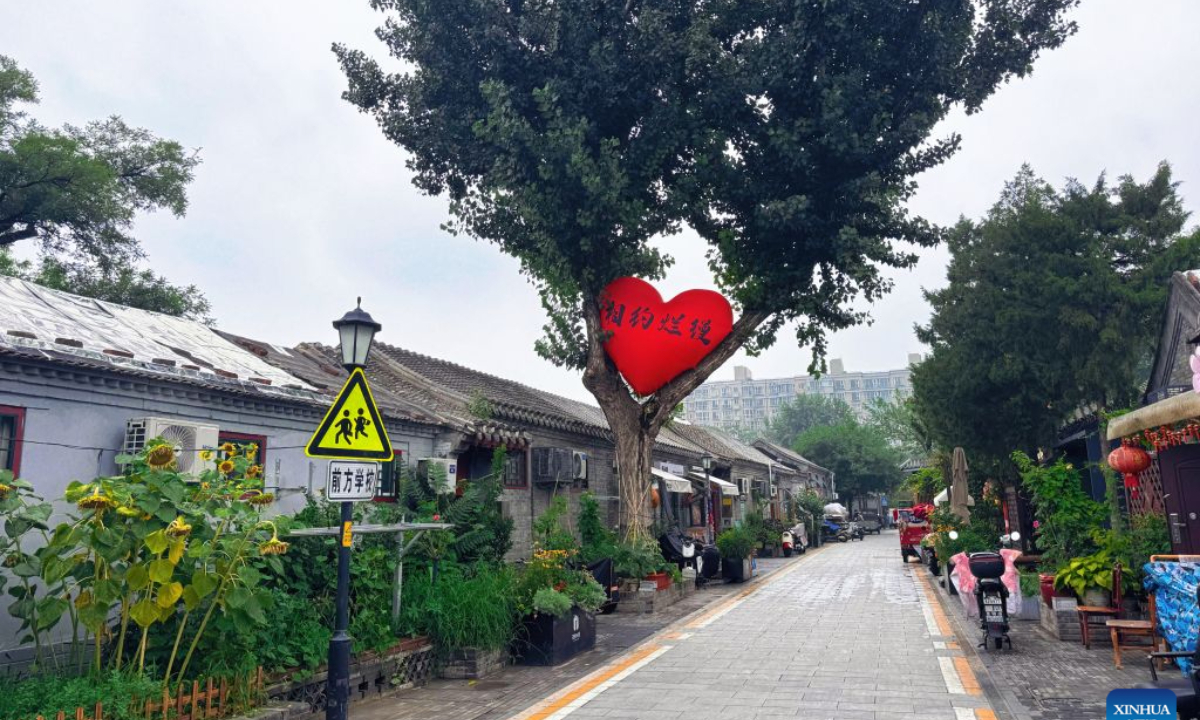
This photo taken on July 10, 2026 shows a view of Lanman Hutong in Beijing, capital of China. (Xinhua/Zheng Keyi)Just after six each morning, 63-year-old Chen Zhongyi unlatches the wooden door of a pigeon loft outside his home in Beijing's Lanman Hutong. Within seconds, more than 20 homing pigeons burst into the sky, circling above the grey-tiled roofs before fanning out across the city.
"That's when I feel happiest in the day," Chen said, his gaze following the birds as they fade from view.
For Chen, who has spent his entire life in this narrow alley, the pigeons are far more than a pastime. They embody a way of life that has long defined the character of Beijing's historic hutongs.
A city with over 3,000 years of recorded history, Beijing has constantly grappled with how to modernise without erasing its past. Lanman Hutong, tucked in the city's core, offers a compelling case study in urban renewal that honours neighbourhood memories while leaving room for the new.
OLD ALLEY, NEW LIFE
When Lanman Hutong launched a major renovation in 2018, Chen feared his hand-built pigeon loft, a fixture since 2013, might have to come down.
To his relief, the designers had other plans. "Pigeons are part of old Beijing's culture," they told him. "They should stay, and we'll upgrade the loft."
The birds were soon moved into a new wooden structure -- brighter, sturdier and better ventilated. "It wasn't just a new pigeon house," Chen said. "It told me that what we treasure can endure."
He was not alone in witnessing the change. Zheng Enqing, 78, who has lived in the neighbourhood for over three decades, recalled the alley's former chaos: cars crammed into every available space, pedestrians squeezing past.
Today, the rough pavement has given way to neatly laid grey bricks, and a nearby multi-story parking facility has freed the lane for foot traffic.
Yet for Zheng, the most telling improvements were those shaped by residents themselves.
When an outdoor air-conditioning unit began blasting hot air onto his prized grapevine, he raised it with the neighbourhood committee.
"They listened," Zheng said, noting that this responsiveness, for him, defined the entire renewal. The unit was moved to the rooftop and screened with a structure that blends with the historic surroundings.
"Our goal was to improve the environment while letting residents keep their way of life," said Chen Qinghong, planning manager at Beijing DeYuan Dade Real Estate Investment Co., Ltd., the project developer.
Chen added that over 100 consultation meetings were held with locals before and during construction, covering everything from parking to landscaping and public facilities.
"Urban renewal should not ask residents to adapt to redevelopment," said Song Jingyang, an official with the Beijing Municipal Commission of Urban Management. "Rather, redevelopment should adapt to the people."
A LIVING COMMUNITY
For planners, however, upgrading the physical fabric was only the first step.
In 2023, Lanman Hutong introduced a voluntary relocation program, letting residents decide whether to stay or leave. Vacant courtyards were then gradually opened to businesses and cultural ventures suited to the historic district's character.
By early 2026, 641 households in the Fayuan Temple Historic District, where Lanman Hutong sits, had opted for relocation, making room for 105 new businesses. Cafés, bookshops, restaurants and cultural studios have since taken root in centuries-old courtyards.
Zheng, who chose to stay, admitted that the newcomers have shifted his outlook. "At first, I thought cafés were only for young people. Now I believe we older residents should also embrace these changes," Zheng said.
He is also cheered by the growing number of young faces in the alley. "That's exactly the kind of change we want to see," he said.
Among them is 23-year-old Hu Feixiong, a graduate student at Beijing University of Civil Engineering and Architecture.
Earlier this year, Hu and his teammates moved into a youth entrepreneurship space in Lanman Hutong, where they began offering architectural cultural products, including layered refrigerator magnets inspired by Beijing's landmarks, directly to customers in a real neighbourhood.
"We only pay basic utility costs, yet we can meet customers, test our products and refine our ideas in a living community," Hu said. Rather than remaining on design sketches or screens, their creations now reach visitors face-to-face in one of Beijing's oldest quarters.
In this way, the city's architectural heritage endures not just through preservation but through the ingenuity of a new generation.
"It is the interaction among residents, businesses and the community that keeps a neighborhood alive," said Wang Mingjun, an official with the Xicheng District Urban Management Committee. "Urban renewal is not a one-off project. It is an ongoing process in which everyone has a role to play."
Official data show that since 2017, more than 5,200 backstreets and alleys in Beijing have undergone environmental upgrades, with resident satisfaction steadily rising.
That approach reflects a broader shift across China. In Jinfeng Town, southwest China's Chongqing Municipality, for instance, residents are pinning their hopes on ongoing renewal projects to raise living standards further.
Under the urban renewal plan for the 15th Five-Year Plan period (2026-2030), China aims by 2030 to build cities that deliver a high quality of life for all -- a vision that, in Lanman Hutong, is already taking shape.
。

D |
游在抚顺·观史听文
抚顺,有着悠久的历史和灿烂的文化,千里浑河的起源,大清王朝的崛起,雷锋精神的发祥,煤炭之都的美誉,重工之城的辉煌,历史的痕迹,在这座城市中沉淀,古老的建筑,诉说着往昔的故事。

E |
来这里,探访历史古迹,聆听岁月的故事,感受工业的“热辣滚烫”,体验一个人、一座城、一种精神的温暖,抚顺,不容错过。
乐在抚顺·民俗非遗
满族文化,是辽宁地域文脉的重要底色,抚顺的民俗风情也颇具特色,喜庆的地秧歌、满族三大怪,蕴含着丰富的历史和文化内涵。
满族婚礼、满族剪纸、满族刺绣、满族旗袍等,别具匠心的民俗文化让您在沉浸式体验中,感受原汁原味的满族风情。
玩在抚顺·乡野拾趣
秋收冬藏,稻浪飘香,金秋时节,抚顺乡野拾趣的“田间课堂”,又将迎来新的“学员”。
在田野、在林下、在河边,融入自然、体验农事、享受民宿、品尝美食,这里有烟火、有生活有故事、有乐趣。
食在抚顺·舌尖寻味
民以食为天,出门旅游吃出精彩,才能让你的旅行更有意义,遍寻小街小巷的老店,打卡网红火爆的餐厅,来一场舌尖上的旅行,美哉美哉。
来抚顺都能吃啥?抚顺麻辣拌第一个申请“出战”,这可是抚顺美食当家“花旦”,以其浓郁的酱料搭配丰富的食材,采用最朴素的烹饪方式,虽说是简简单单的一盘,却让食客们爱在心田。
酸甜麻辣、香气扑鼻的口味,真的是只有你想不到的,没有它“拌”不到的,来麻辣拌一条街逛上一圈儿,品尝舌尖上的“麻辣”抚顺。
一方水土养一方人,水土也会造就一个地方的饮食习惯,说到抚顺的地方风味,当以东北菜和满族特色菜为主打。
口味偏重色香味俱佳小鸡炖蘑菇、猪肉炖粉条、酸菜血肠五花肉还有开河鱼、铁锅炖、羊汤……大盘子大碗上,量大实惠还不贵,每一道菜都讲述着抚顺的故事,传递着这座城市的味道和温度。

F |
“走,撸串去!”来抚顺怎能不吃串!
抚顺的烤串文化也是相当行了,热闹非凡的街边小摊,人气爆棚的烧烤门店,带着满满的“烟火气”,裹着浓浓的“特色味”,为爱吃烧烤的你提供满满的情绪价值,舌尖上的火焰舞蹈,每一口都是对生活的热情与渴望。

G |
抚顺,充满无限魅力,等待你去发现和探索,你准备好来体验这份快乐了吗?大美抚顺等你来!
责任编辑:李丹。
Current article:http://iwy0.qiniaohongfangfoguisenzhai.cyou/7prys/4s22.html
Published on:04:41:58